
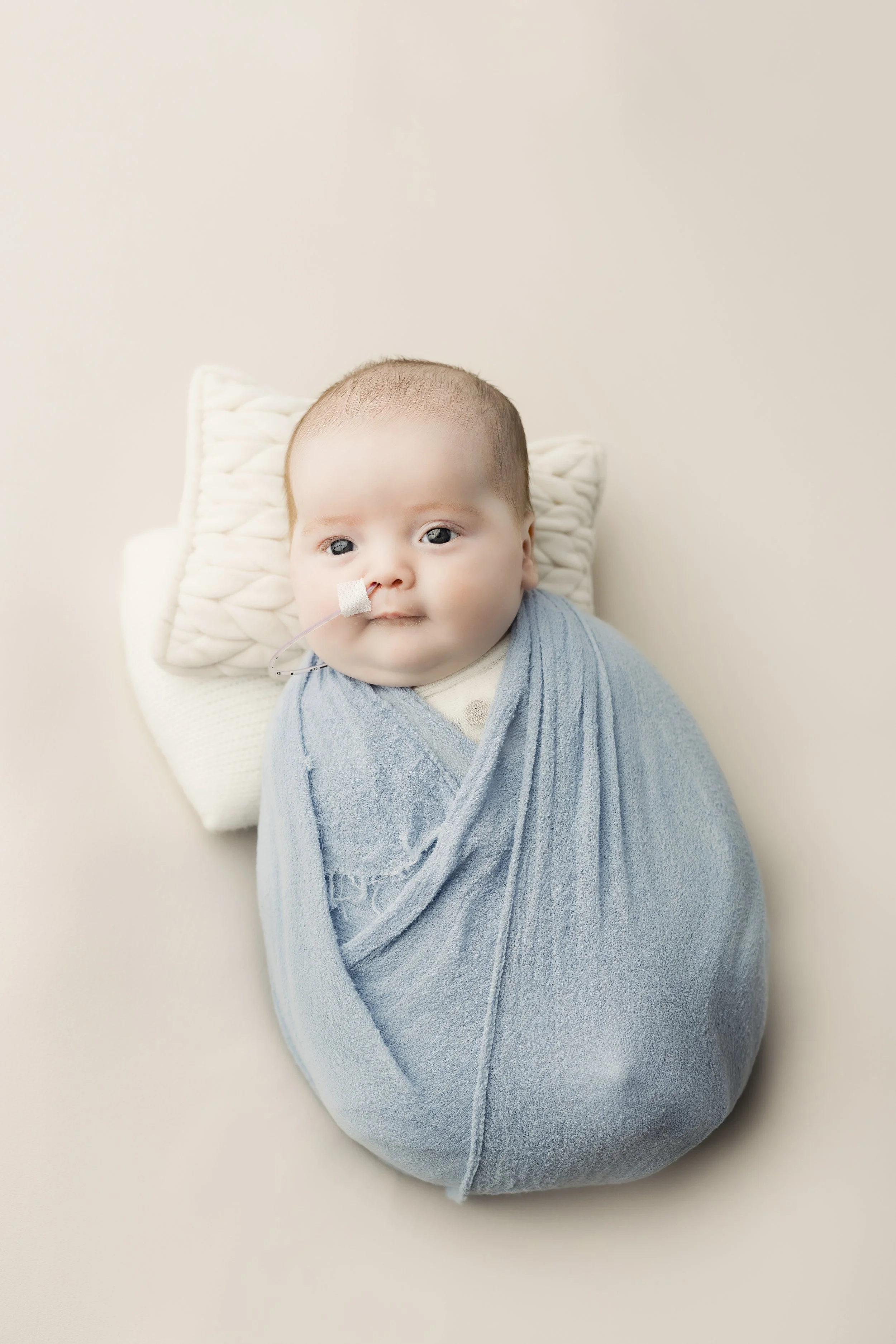
At exactly 20 weeks pregnant, we walked into what we thought would be a routine anatomy scan. Instead, it became the day our world changed. During an ultrasound with a maternal-fetal medicine specialist, our son, Calvin, was diagnosed with congenital diaphragmatic hernia (CDH).
I remember the tone of the ultrasound technologist changing. She kept saying she was measuring his stomach. Then she left the room to grab another ultrasound tech. Soon a doctor came in, then another doctor, and what was supposed to be a routine appointment turned into a four-hour visit. By the time we left that day, the prognosis we were given was grim.
In the days and weeks that followed, we found ourselves thrown into a world we never knew existed. There were countless ultrasounds, MRIs, specialist appointments, and long conversations about survival rates, lung development, and possible outcomes. His lung volume measured at 38% on the first ultrasound. It was also during this time that I discovered I was claustrophobic inside an MRI machine.
We tried to continue living our lives while carrying the weight of so much uncertainty. I had just started a new job, and the stress of preparing for maternity leave was suddenly compounded by the reality of a serious congenital diagnosis. As parents, there was nothing we wanted more than to protect our son, yet so much of his journey was out of our hands.
For the remainder of my pregnancy, Calvin taught us our first lessons in resilience. Every appointment reminded us that his story was still being written. We held tightly to encouraging news when we received it and leaned on one another when the uncertainty felt overwhelming.
Calvin arrived on March 15, 2026, at 37 weeks and 5 days via repeat Cesarean. After 60 seconds of delayed cord clamping, he was whisked into another room, where my husband followed him. Calvin was intubated and given two IV lines.
I had told the medical team that it was very important to me to have pictures, and everyone made that happen. Those photographs would become some of the most precious memories of those first moments with our son.
Just three days later, Calvin underwent surgery to repair the defect in his diaphragm, where his intestine and spleen had moved into his chest. His heart had been pushed completely to the right side of his chest during development.
As strange as it sounds, one of the most beautiful things we have ever witnessed was watching his X-rays over time and seeing his tiny heart slowly move back toward where it belonged.
The NICU was a place of both heartbreak and hope. We celebrated every milestone: eleven days until extubation, successful transitions through different forms of oxygen support, and eventually breathing room air on his own.
Then came the challenge of feeding, which tested all of us in new ways. Every ounce gained, every bottle finished, and every step forward felt monumental.
One of the brightest moments during our NICU stay came when Calvin was finally able to meet his big brother at nearly three weeks old. After weeks of worry, hospital rooms, and uncertainty, watching our boys together for the first time was a powerful reminder of what we were fighting for. For a few moments, the monitors faded into the background, and we could simply be a family.
After 32 days at Seattle Children’s Hospital, surrounded by an incredible team of caregivers, we finally brought Calvin home.
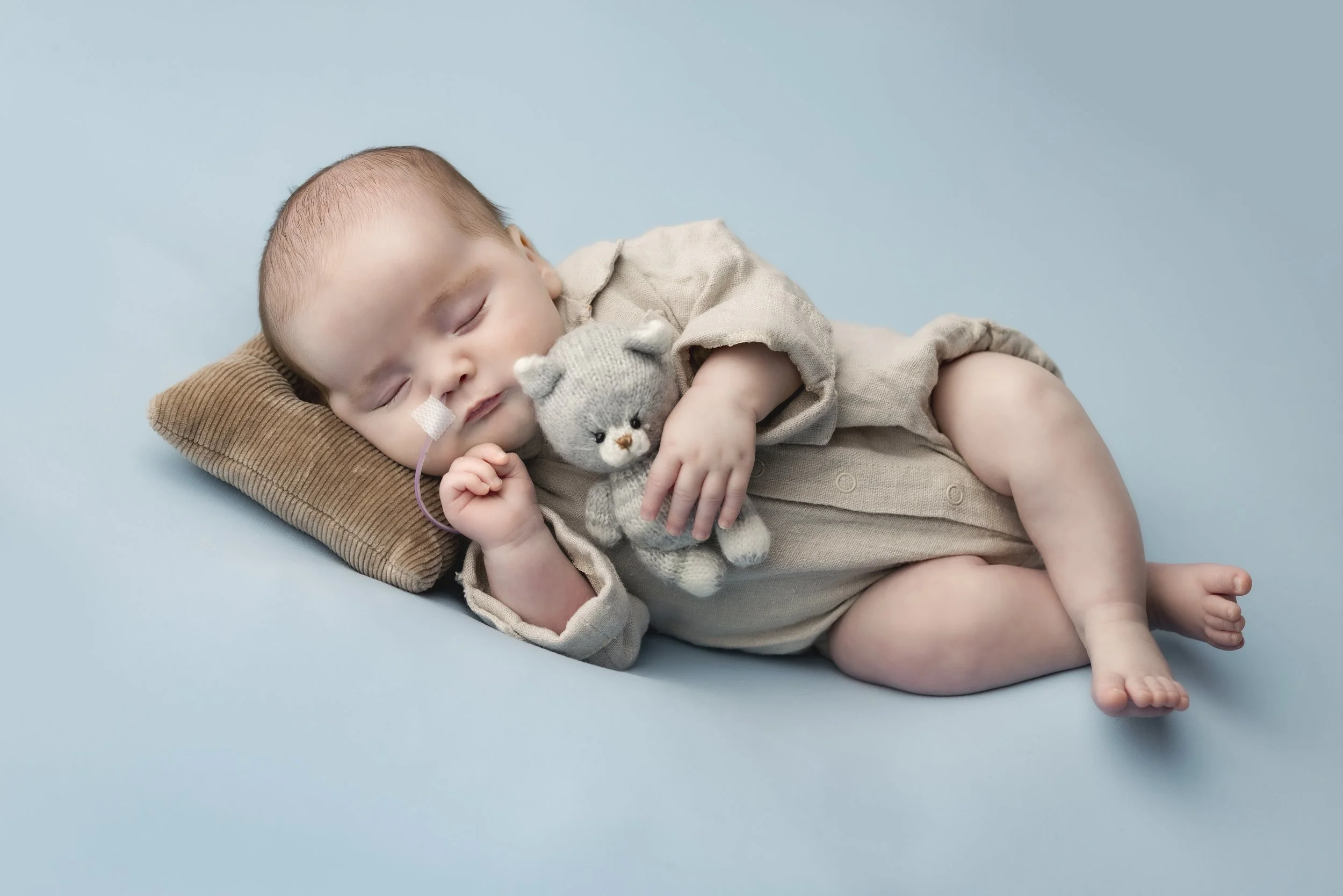
Today, when I watch him sleep, smile, stretch, and discover the world around him, I am reminded of how extraordinary ordinary moments truly are.
CDH changed our lives forever. It taught us that strength can come in the smallest packages, that hope is powerful, and that miracles do not always look dramatic—they sometimes look like a baby finally coming home.
Calvin is our tiny hero, and we are endlessly grateful for the journey that brought him to us.