Everett’s CDH Story
Our journey began in June 2023 when we found out Jackie was pregnant with twins. At our first ultrasound, we learned we were having not one, but two babies. What an incredible blessing and surprise! Because it was a twin pregnancy, we were followed closely by a Maternal Fetal Medicine specialist. Everything looked perfect at the 16-week scan, but at 20 weeks, our joy turned to fear.
We learned that our baby boy, Twin A, had his stomach in his chest. After further testing, doctors diagnosed him with a severe form of Congenital Diaphragmatic Hernia (CDH). His liver, stomach, intestines, colon, and spleen had all moved into his chest, leaving little room for his lungs to grow. We were devastated but determined to give him the best chance at life. At 31 weeks, our family transferred care to Dr. David Kays and the Center for CDH at Johns Hopkins All Children’s Hospital in St. Petersburg, Florida.
We packed up our lives, our two-year-old son, and Jackie’s mom, and moved across the country. Jackie arrived in Florida just in time. Her water broke that night, and four days later, on December 19, 2023, our twins were born via C-section at just 33 weeks. Addison went to the NICU, and Everett was taken straight to the CDH unit. Within hours, doctors told us he needed ECMO to help him breathe. At just two and a half hours old and weighing only 3 pounds 12 ounces, Everett was placed on life support.
The next morning, his hernia was repaired with a GOR-TEX patch in an eight-hour surgery. We learned afterward that he had only 10% lung volume on the left side and that 45% of his liver had been up in his chest. Still, our tiny warrior fought on.
Ten days later, what appeared on his X-ray as fluid turned out to be part of his liver behind his right lung. Everett didn’t just have left-sided CDH; he had bilateral CDH, with hernias on both sides. Bilateral CDH is extremely rare and often fatal. Dr. Kays gently explained that only about 1% of babies with CDH have it on both sides, and only 1% of those survive. Our hearts broke, but Everett had already proven he wasn’t giving up, and neither were we.
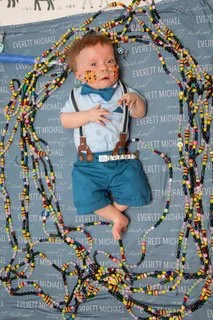
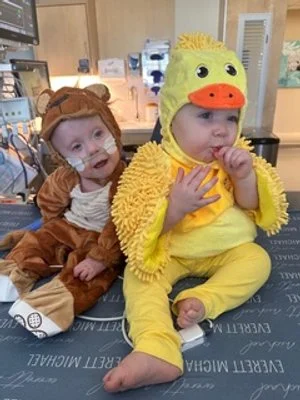
At 15 days old, Everett underwent a second repair on his right side. The surgery went well, but the pressure in his abdomen became too great, and he had to go back to the operating room that night for another patch. His kidneys were affected but eventually recovered. Over the next few weeks, Everett faced more challenges, including dangerously high bilirubin levels that required eight exchange transfusions while on ECMO. On day 44, he came off ECMO for the first time, but his body wasn’t ready yet. Five hours later, he had to be put back on. It was one of the hardest days of our lives.
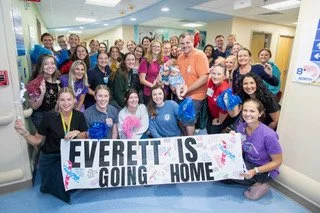
Still, Everett fought. On day 64, after another trial, he came off ECMO, and this time it was flawless. By day 85, his breathing tube was removed, and he started taking bottles. He loved them, but reflux soon made feeding too difficult. At four months old, he had a Nissen Fundoplication and G-tube surgery. Even with setbacks, our little fighter continued to amaze everyone. At 231 days old, after more than seven months in the hospital, Everett finally came home for the first time. It was one of the happiest and most emotional days of our lives.
His homecoming was short-lived. Over the next few months, Everett faced several readmissions for feeding intolerance and desaturations. We tried everything—adjusting medications, changing feeds—but he continued to struggle. When he was ten and a half months old, doctors suggested a GJ tube to help bypass his stomach and ease pressure on his lungs. Not long after, Everett had a severe aspiration episode that led to respiratory failure.
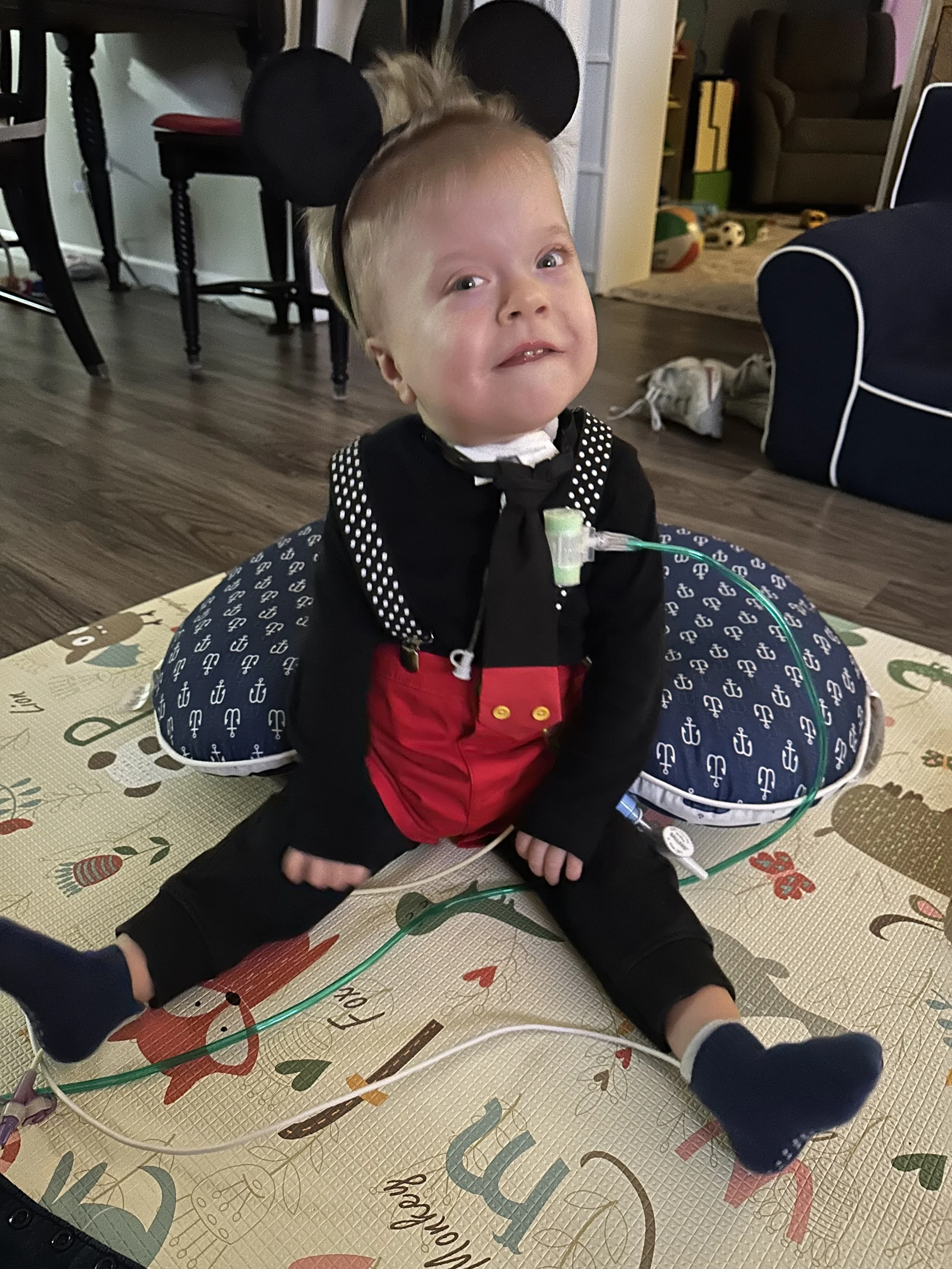
We were exhausted, scared, and far from home. As his first birthday approached, we faced an impossible decision—how to help our son truly live. After many tearful discussions, we decided to move forward with a tracheostomy to give Everett a stable airway and the ability to grow without constantly fighting to breathe. One week before his first birthday, he had the procedure. It was the best decision we could have made. Our boy began to thrive.
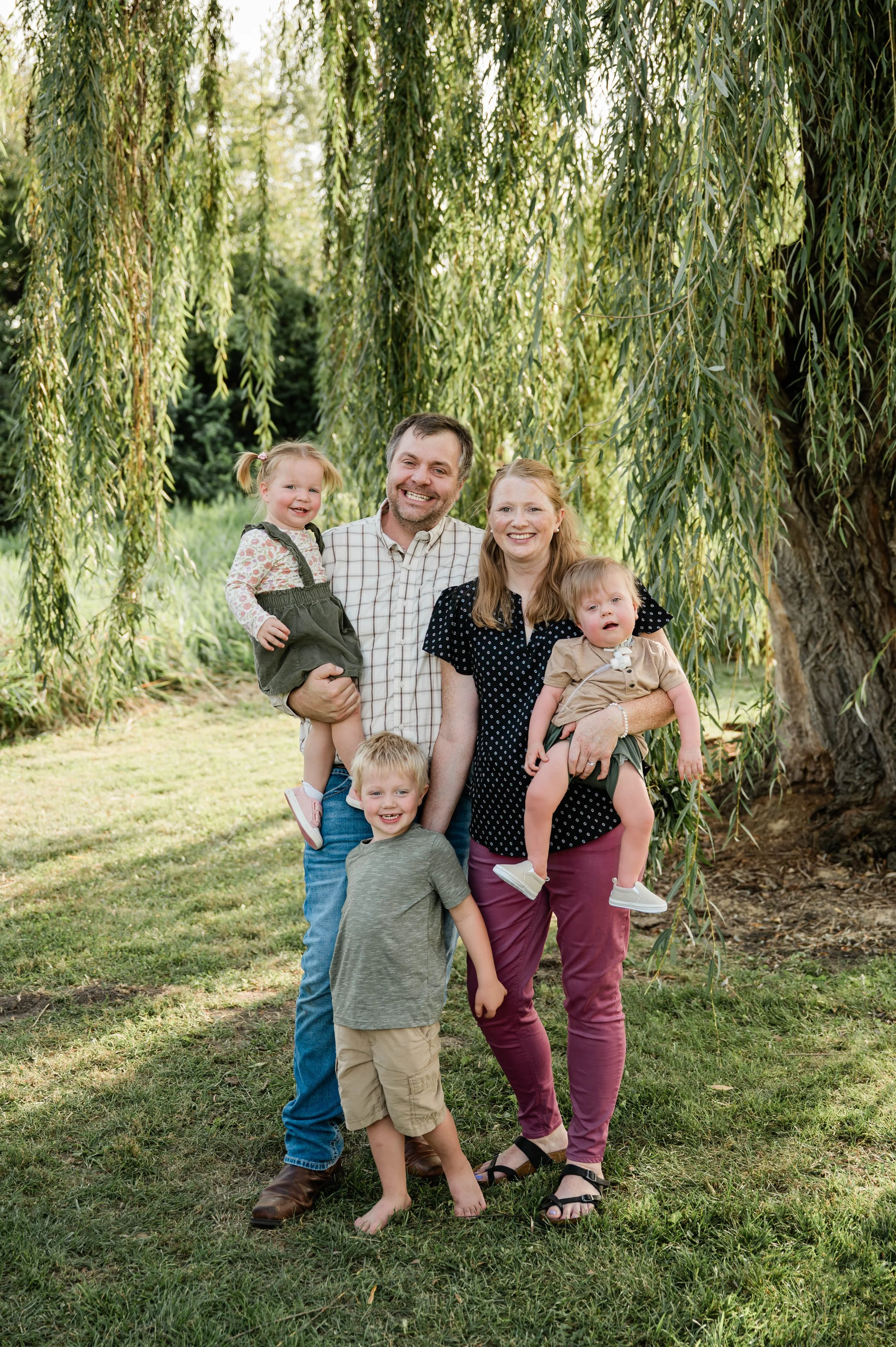
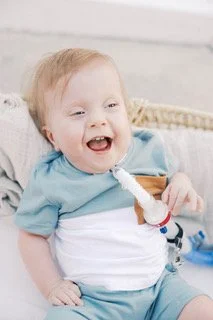
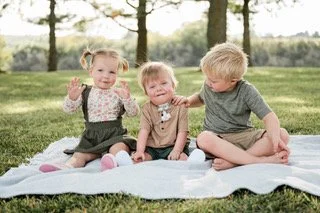
After 14 long months in Florida, our family finally returned home to Iowa in March 2025. Since then, Everett has continued to surprise everyone. He has been trialing off his ventilator twice a day, growing stronger, and reaching new milestones. After ten months with a GJ tube, he transitioned back to a G tube and has been doing great. He is sitting up, working on crawling and standing, and adores his siblings, especially when they bring him toys or play trucks together.
We want to share our Everett with the world. We had his name picked out before he was born. While he was in the hospital, we learned that Everett means “brave, strong, and resilient.” He quickly became known as Everett the Brave. Our goal is to provide hope to the families receiving the diagnosis, to those in the middle of the fight, and to those searching for the courage to keep advocating for their loved ones. For families receiving the bilateral diagnosis, please use the incredible resources available and reach out to the top CDH centers for their opinions.
After receiving Everett’s left-sided CDH diagnosis, I remember wanting to avoid anything related to CDH on social media because it felt too overwhelming. Looking back, I wish I had connected with this community sooner. We are here for you and want you to know that you are stronger than you think—and so is your little one.